

Heat-Treated Crystals vs Natural: A Buyer's Guide
Table of Contents
- What Heat Treatment Does to Crystals
- How to Identify Natural Citrine
- Signs of Heat-Treated Amethyst
- Heat-Treated Amethyst vs Citrine: Key Differences
- Visual Clues: Color, Zoning, and Inclusions
- Testing Methods and Their Limits
- Ethical Buying: Asking the Right Questions
- Frequently Asked Questions
Last Updated: October 17, 2026
What Heat Treatment Does to Crystals
Heat treatment fundamentally alters the molecular structure and appearance of crystals, changing their color, clarity, and internal characteristics in ways that can be difficult to detect without proper knowledge of heat-treated crystals natural formation. When crystals like amethyst are exposed to controlled high temperatures, the heat causes color centers within the stone to shift or intensify, creating hues that don't occur naturally. This process is widespread in the crystal industry because it's cost-effective and produces visually striking stones that appeal to buyers.
The transformation isn't random. Heat treatment typically darkens pale stones or shifts their color entirely. Amethyst, which is naturally purple quartz, can turn yellow, golden, or brownish when heated to specific temperatures. This creates what many sellers market as "natural citrine," though true natural citrine is far rarer than heat-treated amethyst. At MyLee Moon Blessings, we prioritize transparency about these processes.
Understanding what heat treatment does is the foundation for identifying it. The heat causes irreversible changes to the crystal's internal structure. Color shifts occur because the iron impurities within the quartz respond to temperature, changing how light passes through the stone. Some heat-treated crystals natural in appearance also develop a characteristic white or pale base, a telltale sign that the color has been artificially enhanced rather than naturally formed throughout the entire crystal.
How to Identify Natural Citrine
Natural citrine is genuinely rare, which is why so many yellow and golden crystals on the market are actually heat-treated amethyst. True natural citrine forms under specific geological conditions and typically displays a lighter, more uniform color compared to its treated counterparts. When you're learning how to identify natural citrine, start by understanding what makes it distinct: natural stones usually have a soft, pale yellow to golden hue that's consistent throughout, without dramatic color zoning or stark white bases.
Real natural citrine rarely appears in deep, saturated colors. If you see a bright golden or orange-yellow crystal labeled as natural citrine, it's worth questioning. Natural stones tend toward subtler tones, pale yellow, honey-colored, or light golden. The color distribution is also more even. You won't typically see sharp lines where the color changes from pale to dark, or white sections at the base. These are hallmarks of heat treatment, not natural formation.
When examining a potential natural citrine, look at the entire crystal, not just the most visible face. Natural color should be relatively consistent as you rotate the stone and view it from different angles. Heat-treated stones often show dramatic differences depending on where you look. Additionally, natural citrine frequently contains visible inclusions, tiny internal fractures, other mineral deposits, or cloudy areas. These aren't flaws; they're evidence of the stone's authentic geological history.
Signs of Heat-Treated Amethyst
Heat-treated amethyst has become so common that it now dominates the market for yellow and golden quartz crystals. Recognizing the signs of heat-treated amethyst is essential for anyone serious about building an authentic collection. The most obvious indicator is the white or pale base, a phenomenon that almost never occurs in naturally formed citrine. When amethyst is heated, the color shift often begins at the top of the crystal and works downward, leaving the base pale or completely colorless.
The color itself is another major clue. Heat-treated amethyst frequently displays deep golden, orange, or even brownish-yellow tones that look almost too vibrant to be natural. The saturation is often uniform and intense in a way that natural citrine rarely achieves. Additionally, heat-treated stones often show dramatic color zoning, sharp lines or bands where the color changes abruptly from one shade to another. Natural citrine transitions more gradually, if at all.
Internal characteristics also reveal heat treatment. Look for a glassy, almost artificial appearance to the color. Natural citrine has a softer, more organic quality. Heat-treated stones sometimes appear almost too perfect, with colors that seem almost painted on. You might also notice that the crystal lacks the subtle variations in tone that characterize naturally formed stones. Every face looks nearly identical, which is unusual in nature but common in treated material.
| Characteristic | Natural Citrine | Heat-Treated Amethyst |
|---|---|---|
| Base color | Golden throughout | White or pale base |
| Color intensity | Soft, pale to medium | Deep, saturated golden |
| Color zoning | Gradual or absent | Sharp, dramatic bands |
| Inclusions | Visible, varied | Often fewer or uniform |
| Overall appearance | Organic, subtle variations | Uniform, glassy |
Heat-Treated Amethyst vs Citrine: Key Differences
The distinction between heat-treated amethyst and natural citrine matters because they have different values and different geological histories. Understanding these differences helps you make informed choices about what you're bringing into your spiritual space. The primary difference lies in origin: natural citrine formed over millions of years under specific geological pressure and temperature conditions, while heat-treated amethyst is created intentionally in a matter of hours or days.
From a visual standpoint, the white base is perhaps the most reliable differentiator. Natural citrine doesn't develop this feature because its color forms gradually during the crystal's growth process. Heat-treated amethyst shows this base because the heating process affects the stone unevenly. The top, which receives more direct heat exposure, changes color dramatically, while the bottom remains pale or unaffected.
The color quality also differs meaningfully. Natural citrine tends toward warmer, softer tones, honey, light gold, or pale yellow. Heat-treated amethyst often displays brighter, more saturated colors that can appear almost artificial.
Price is another practical difference. Natural citrine commands higher prices because it's genuinely rarer. Heat-treated amethyst is affordable, which makes it accessible but also means sellers sometimes misrepresent it as natural to justify higher prices. This is where transparency becomes crucial. At MyLee Moon Blessings, we clearly disclose the treatment status of every crystal.
Visual Clues: Color, Zoning, and Inclusions
When you're examining crystals in person or through photographs, focus on three key visual elements: color consistency, color zoning patterns, and internal inclusions. These three factors tell the story of whether a crystal formed naturally or was treated.
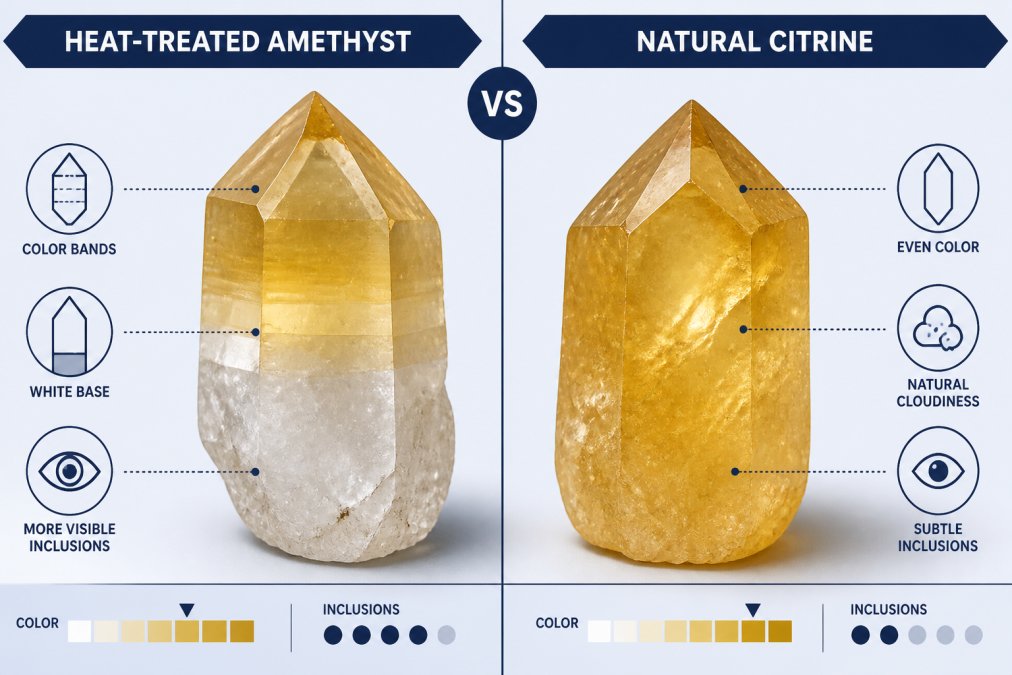
Color consistency is the first thing to evaluate. Run your eye across the entire surface of the crystal. Does the color remain relatively stable, or does it shift dramatically from one section to another? Natural citrine maintains fairly consistent coloring.
Color zoning refers to visible bands or layers of different colors within the crystal. While some natural stones show gentle color gradations, sharp, clearly defined zones are a red flag for heat treatment. These bands appear where the heat affected the stone differently at different depths.
Internal inclusions are the third element. Natural citrine frequently contains visible inclusions, tiny air bubbles, mineral deposits, or internal fractures that catch light. Heat-treated stones sometimes have fewer inclusions or show them in patterns that seem too uniform. The presence of varied, scattered inclusions actually supports authenticity.
Testing Methods and Their Limits
Several testing methods can help you assess whether a crystal has been heat-treated, though each has limitations. Professional gemological testing, such as spectroscopy or microscopy, can sometimes identify heat treatment by examining the crystal's internal structure and color distribution patterns (How Does AGS Laboratories Determine Diamond Treatments?).
Visual examination remains the most accessible and practical tool. By carefully observing color, zoning, inclusions, and the base of the crystal, you can develop reliable instincts about what you're looking at. This method requires practice and honest observation, but it's free and available to everyone. The key is learning to trust what you see rather than what sellers tell you.
Lighting matters tremendously when you're examining crystals. Natural sunlight reveals details that artificial light might obscure. Hold the crystal up to a window and rotate it slowly. Observe how the color changes as light passes through from different angles. Heat-treated stones often show the color shift more obviously in bright light, especially the pale base that becomes obvious when backlit.
Photography can sometimes reveal details that the naked eye misses, but be cautious about relying on photos alone. Lighting, camera settings, and color balance can all distort how a crystal appears. A photo taken under warm lighting might make heat-treated amethyst look more natural, while a photo taken under cool lighting might make natural citrine appear more treated.
Ethical Buying: Asking the Right Questions
The most important step in ethical crystal buying is asking sellers direct questions about treatment status. Reputable sellers disclose this information willingly because they have nothing to hide. If a seller becomes evasive, defensive, or claims they "don't know" whether a crystal has been treated, that's a warning sign.
When you're shopping, ask specific questions: "Is this crystal natural or heat-treated?" "Has this stone undergone any treatment?" "Can you provide documentation about the source and treatment history?" Legitimate sellers can answer these questions directly.
Look for sellers who provide real photography from multiple angles and in different lighting conditions. This transparency shows confidence in their products. Sellers who use heavily filtered, edited, or studio-only photos might be trying to hide something. Natural lighting photos reveal the true appearance of a crystal.
Documentation matters. Ethical sellers who work with suppliers they trust can often provide information about where crystals come from and how they've been handled.
Consider the price point as well. If a crystal is priced significantly lower than comparable stones, ask why. Sometimes it's because the seller has lower overhead. Sometimes it's because the stone has been treated or misidentified.
Choosing authentic, ethically sourced crystals is an investment in your spiritual practice. When you understand the signs of heat-treated crystals versus natural stones, you make informed decisions that align with what you're truly seeking.
At MyLee Moon Blessings, we're committed to providing crystals with complete transparency about their origin and treatment status. We energetically cleanse every crystal before shipping to ensure it arrives ready for your practice. Learn more about ethical crystal sourcing practices and explore our collection of authentic, verified crystals that support your spiritual journey with integrity and intention.
Frequently Asked Questions
How can you tell if a crystal has been heat-treated?
Heat-treated crystals often show uniform color throughout, pale or washed-out hues, and a distinctive white or colorless base. Natural citrine typically displays deeper golden or honey tones with gradual color zoning. Look for uneven coloration patterns and examine the stone under different lighting. Heat treatment removes natural color variation that develops over time in genuine stones. Professional gemological testing can confirm treatment, though visual inspection catches most common cases.
What are the signs of heat-treated citrine?
Heat-treated amethyst (sold as citrine) shows several telltale signs: overly bright, uniform yellow or orange color; a pale or white base where the crystal point meets the body; lack of natural color gradation; and sometimes a slightly artificial appearance. Natural citrine develops its color slowly and displays subtle variations in tone. Treated stones often look 'too perfect' in color distribution. Check the transparency and internal clarity, treated stones may show fewer inclusions or a cleaner appearance than expected for authentic citrine.
Is heat-treated amethyst still citrine?
Technically, no. Heat-treated amethyst is still amethyst that has been artificially altered. True natural citrine is a distinct variety of quartz that develops its yellow or golden color naturally over geological time. While both are quartz, heat treatment transforms amethyst's purple hue into yellow or orange tones. Ethical sellers disclose this treatment because it affects the stone's value. When shopping for authentic citrine, ask sellers directly whether their stones are naturally colored or heat-treated.
Does natural citrine look different from heat-treated amethyst?
Yes, significantly. Natural citrine displays warm golden, honey, or champagne tones with gradual color transitions and visible variations in saturation. Heat-treated amethyst typically shows bright, uniform yellow or orange color with a distinctive pale or white base. Natural citrine's color usually deepens toward the termination point, while treated stones often have consistent color throughout. Internal inclusions differ too, natural citrine may show more varied internal features.