

How to Spot Fake Crystals: A Complete Guide
Table of Contents
- Why Authenticity Matters When Buying Crystals
- Physical Tests to Spot Fake Crystals
- How to Test Crystal Hardness Using the Mohs Scale
- Identifying Signs of Dyed Crystals
- Thermal Conductivity and Temperature Tests
- Are Heat Treated Crystals Less Effective for Your Practice
- UV Light Fluorescence Testing for Authenticity
- Common Materials Used in Fake Crystals
- Frequently Asked Questions
Last Updated: October 7, 2026
Why Authenticity Matters When Buying Crystals
When investing in crystals for your spiritual practice, knowing how to spot fake crystals is essential.
Fake crystals aren't just a waste of money, they undermine your spiritual work.
This guide covers practical tests you can perform right now, no specialized equipment or gemological training required.
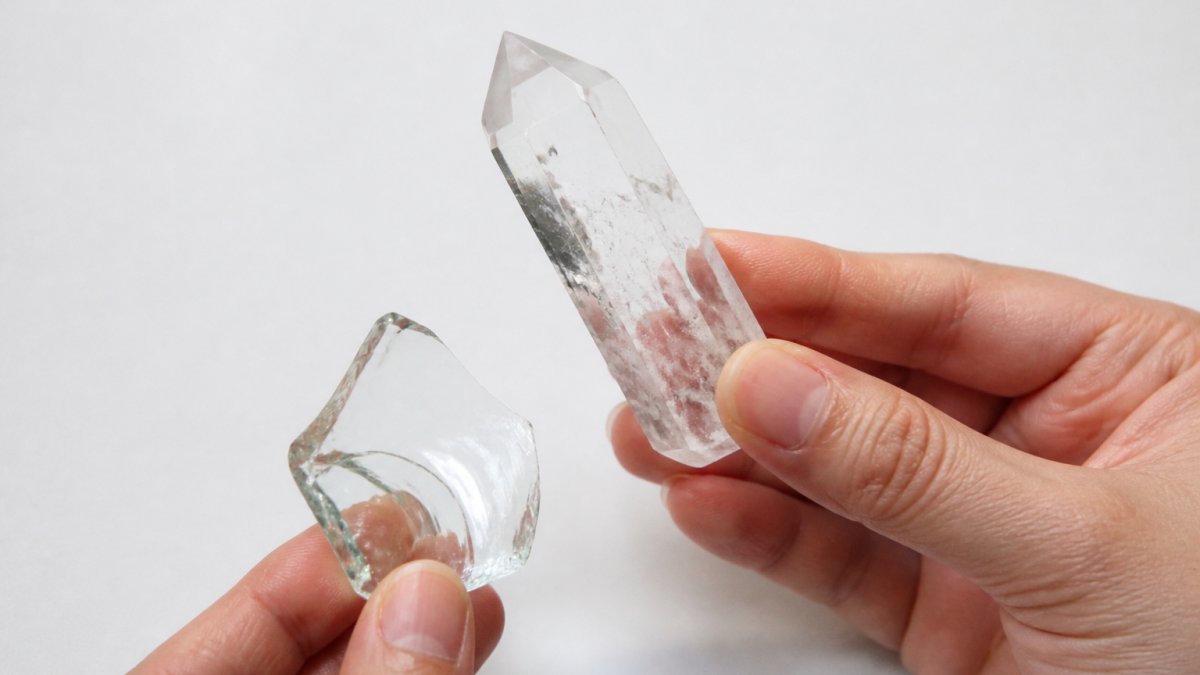
Physical Tests to Spot Fake Crystals
The most reliable way to identify a genuine crystal starts with simple physical observation, examine the stone with your hands and eyes before paying for testing.
The Weight and Density Test
Real crystals feel noticeably heavier than synthetics. Hold a suspected fake in one hand and a known authentic crystal of similar size in the other, genuine stones have greater density.
Glass imitations are particularly light, and plastic fakes feel hollow. If a crystal feels unusually light for its size, that's your first red flag. Resin falls between glass and authentic crystals in weight, so use this test alongside others.
The Sound and Resonance Test
When you gently tap a real crystal against another crystal or a smooth ceramic surface, you'll hear a clear, resonant tone, a sustained ring created by its organized atomic lattice.
Fake crystals produce a dull thud: glass sounds hollow, plastic sounds muted. Lab-grown synthetics sometimes ring like natural crystals, so pair this test with others.
Hold the crystal loosely between thumb and forefinger and tap gently. A clear, sustained sound suggests authenticity; a flat, dead sound suggests imitation.
How to Test Crystal Hardness Using the Mohs Scale
The Mohs scale ranks minerals from 1 (talc) to 10 (diamond) by scratch resistance. Most popular healing crystals sit in a narrow band, and the most common fakes, glass, resin, and plastic, sit below it. Knowing the reference numbers lets a single scratch test eliminate a whole category of imitations.
Reference Points You Can Use at Home
Common household items map to known Mohs values:
- Fingernail: about 2.5
- Copper penny (pre-1982, 95% copper): about 3.5
- Quartz (a known genuine clear quartz point): 7 (Mohs Hardness Scale)
A genuine stone rated 7 or higher won't be scratched by a penny or knife; a glass imitation (5.5) will. That single comparison often separates the two.
Mohs Values for the Stones People Actually Buy
Use these standard reference values as your cheat sheet:
- Quartz (clear, rose, smoky, amethyst, citrine): 7
- Amethyst and citrine are quartz varieties, so they share the 7 rating
- Agate, chalcedony, jasper, carnelian: 6.5 to 7
Two things stand out. Obsidian is natural volcanic glass, so a scratch test can't distinguish it from a man-made fake, use visual and thermal tests instead. And soft genuine stones like fluorite, calcite, selenite, and malachite scratch easily, so a positive scratch result doesn't mean they're fake. Hardness testing only detects fakes on stones rated 7 and above.
How to Run the Test Without Damaging a Real Stone
- Pick an inconspicuous spot, the base of a point, the underside of a cabochon, or a rough edge.
- Start soft: fingernail, then copper penny, then steel blade. Stop as soon as you see a scratch.
- Scratch in one direction with light, steady pressure, don't saw back and forth.
- Wipe with a soft cloth and check under bright light. A true scratch removes material; a metal streak usually rubs off.
- Compare to the stone's expected Mohs value. If a supposed quartz (7) scratches with a penny (3.5), it isn't quartz.
Where This Test Fails
Hardness testing tells you what a stone is not, not always what it is. Two limitations:
- Same-hardness fakes. Lab-grown quartz shares natural quartz's Mohs value, so a scratch test can't separate them, you need microscopic inspection for growth patterns.
- Composite and treated stones. Dyed quartz, heat-treated amethyst, and resin-filled turquoise pass a hardness test because the underlying mineral is real. The hardness is genuine; the color or filler is not.
Pair the Mohs test with the weight, thermal, and loupe checks in this guide, alone, it's a filter, not a verdict.
Identifying Signs of Dyed Crystals
Dyed crystals are real stones that have been artificially colored. Unlike heat treatment, which shifts natural color through temperature alone, dyeing introduces a foreign substance, usually chemical dye or ink, into the stone's fractures and pores. The mineral is genuine; the color is not. A dyed stone will pass every hardness, weight, and thermal test in this guide, so the only reliable check is visual, with a 10x jeweler's loupe.
Why a Loupe Beats the Naked Eye
A 10x loupe costs a few dollars and folds into your pocket. Under magnification, dye becomes obvious in seconds. Look for:
- Color that pools in cracks. Dye flows into fractures and pits, then dries there. Under a loupe, you'll see dark, concentrated lines tracing the cracks while the surrounding crystal stays pale.
- Color that stops at the surface. Natural color runs through the stone; dye sits on top. If color fades at the edges of a chip or scratch, it's surface dye.
- Uneven color between outside and inside. Compare the rind to the core on a broken or tumbled stone. Natural amethyst is purple throughout; dyed amethyst is often purple outside and nearly white in the center.
Stone-by-Stone Cheat Sheet
Dyeing tricks differ by stone. What to check for the most commonly dyed varieties:
- Amethyst. Natural amethyst shows color zoning, bands of lighter and darker purple, often with a colorless or smoky base and a darker tip. Dyed quartz sold as amethyst is uniformly purple with dye pooled in fractures.
- Citrine. Most commercial citrine is heat-treated amethyst, legitimate, not dye. True dyed citrine is rarer; look for orange concentrated in cracks. Natural citrine is pale yellow to gold, not deep burnt-orange.
- Rose quartz. Natural rose quartz is cloudy and translucent, with color that fades in and out. Dyed rose quartz is flat, even pink, often with dye in surface pits.
Natural Color Zoning vs. Dye: How to Tell Them Apart
The single most useful skill is telling natural color zoning from dye. Both create uneven color, so beginners confuse them.
- Natural zoning follows growth. Color bands run parallel to crystal faces or radiate from the center, the color is inside the stone.
- Dye follows damage. Dye concentrates in fractures, pits, and grain boundaries where liquid could enter, the color is in the cracks, not the crystal structure.
Quick test: hold the stone to a bright light. Natural zoning looks like layers inside the stone; dye looks like dark lines tracing cracks, with the crystal body between them nearly colorless.
Heat Treatment vs. Dyeing: A Quick Distinction
Heat treatment isn't dyeing and isn't automatically a red flag. Many amethyst and citrine on the market are heat-treated, with stable color that runs through the stone. Dyeing adds a foreign substance and is the one to watch for. A seller disclosing heat treatment is a transparency signal; a seller claiming bright blue agate is natural is a warning.
Thermal Conductivity and Temperature Tests
Real crystals conduct heat differently than glass or plastic, one of the most reliable at-home tests.
Glass and plastic warm up much faster, feeling room-temperature almost immediately. Authentic crystals stay cool longer thanks to superior thermal conductivity.
This test is especially effective for quartz, amethyst, and other silicates. Some synthetics mimic thermal properties, so combine it with other tests.
Are Heat Treated Crystals Less Effective for Your Practice
Heat treatment differs from dyeing. Many natural crystals undergo heat treatment to enhance color or clarity, using controlled temperature without adding foreign substances.
Here the line between scientific fact and spiritual belief matters. Mineralogically, heat treatment slightly changes the crystal's internal structure, the atomic arrangement shifts.
Others argue that because heat treatment uses only temperature, a natural element, the crystal retains its essential energetic signature.
At MyLee Moon Blessings, we prioritize authenticity and transparency.
UV Light Fluorescence Testing for Authenticity
Many crystals fluoresce under ultraviolet light, emitting visible light when exposed to UV radiation, a property rarely seen in imitations. An inexpensive UV flashlight works fine.
In a dark room, shine the UV light on your crystal. Authentic stones glow with distinctive colors: amethyst may glow blue or violet, fluorite purple or blue, and some clear quartz orange or red.
Glass doesn't fluoresce the same way, and plastic shows no fluorescence or a generic glow unrelated to the stone's supposed type.
Different crystals fluoresce differently, so research the specific pattern for each type.
Common Materials Used in Fake Crystals
Understanding what fakes are made from helps you recognize them.
Glass and Plastic Imitations
Glass is the most common fake crystal material, inexpensive, easy to color, and visually similar to genuine stones.
Glass scratches easily, doesn't conduct heat like genuine stones, and sounds hollow when tapped.
Plastic fakes are easier to spot: extremely light, hollow-feeling, often with visible seams or manufacturing marks. They don't conduct heat and sound muted when tapped, the weight test alone usually confirms it.
Resin and Lab-Grown Synthetics
Resin is man-made, colored and shaped to resemble crystals.
If a crystal appears flawless, no inclusions, cloudiness, or color variation, it may be lab-grown.
Lab-grown crystals aren't fraudulent like glass imitations, but they're not authentic natural stones.
When you're ready to invest in authentic crystals for your spiritual practice, MyLee Moon Blessings offers a curated collection of verified genuine stones.
Frequently Asked Questions
How can I tell if a crystal is real or fake with basic tools at home?
Start with three simple tests: the weight test (authentic crystals feel heavier than glass or plastic imitations), the temperature test (real crystals stay cool longer when held), and the hardness test using a knife or coin to check for scratches. Authentic crystals also show natural fractures and imperfections, while fakes often have uniform, flawless surfaces. Combine these physical tests to build confidence in authenticity before making a purchase.
What are the signs of dyed crystals I should watch for?
Dyed crystals display unnatural, overly vibrant colors that look artificially saturated compared to natural stones. Check for color concentration along fractures and cracks, dyes pool in these areas, creating dark lines or spots. Examine the stone under bright light; natural color distributes evenly throughout the crystal structure, while dyed pieces show patchy or streaked coloring. Run a damp cloth over the surface; some dyes may transfer slightly, indicating artificial treatment.
Are heat treated crystals less effective for spiritual or healing purposes?
Heat treatment is a common practice that alters a crystal's color or clarity through high temperatures. While heat-treated stones are still natural crystals with the same mineral composition, some practitioners believe the energetic properties may differ from untreated specimens. The effectiveness depends on your personal belief system and intention. If authenticity and natural state matter to your practice, choose untreated stones if that aligns with your spiritual approach.
How can I test crystal hardness to verify it's not glass or plastic?
Use the Mohs hardness scale as a reference: quartz rates 7, amethyst rates 7, and most healing crystals fall between 6-9 on the scale. Test by gently attempting to scratch the stone with a coin (hardness 3) or a knife (hardness 5-6). Real crystals resist scratching from these tools, while glass and plastic scratch easily. Natural crystals also show characteristic fracture patterns when struck lightly, whereas glass breaks with conchoidal (curved) fractures and plastic deforms or cracks irregularly.