

Is Raw Amethyst Worth It for Home Decor?
Last Updated: October 25, 2026
Quick Summary
Yes, raw amethyst is worth it for home decor if you want a natural statement piece at a low entry price. A raw cluster starts at $7.77 and works as a shelf display, altar centerpiece, or nightstand piece. Judge it by cost per display rather than price per pound.
- Raw amethyst keeps its natural shape, visible matrix, and irregular crystal tips, while polished amethyst is cut or tumbled smooth.
- A $28 standing cut base cluster anchors a shelf without needing a stand, frame, or mounting hardware.
- Real amethyst shows uneven color zoning, natural inclusions, and slight variation between points.
- Keep pieces in indirect light, since sustained ultraviolet exposure can bleach the violet over months.
- Dust with a soft dry cloth or brush and avoid saltwater soaks, vinegar, bleach, and abrasive polishes.
Table of Contents
- Is Raw Amethyst Worth It for Home Decor? The Honest Answer
- Raw vs Polished Amethyst: Which Belongs in Your Space?
- Rough Amethyst Price: What You Actually Pay
- How to Tell If Amethyst Is Real
- Amethyst Geode Buying Guide: Size, Color, and Crystal Quality
- Room-by-Room Styling and Scale Guidance
- Care, Cleaning, and Sunlight Risks
- Choosing Your Raw Amethyst Piece
- Frequently Asked Questions
Is Raw Amethyst Worth It for Home Decor? The Honest Answer
Yes, raw amethyst is worth it for home decor if you want a natural statement piece at a low entry price. A raw cluster starts at $7.77 and works as a shelf display, altar centerpiece, or nightstand piece. Below, we break down cost, authenticity, styling, and care so you can decide with clear eyes.
The honest caveat: raw amethyst is a natural crystal, not a manufactured object. It varies in color, shape, and finish, and it can fade in direct sun. Buy it for character, not uniformity.
Raw vs Polished Amethyst: Which Belongs in Your Space?
Raw amethyst is unpolished crystal left in its natural formation, while polished amethyst is cut, tumbled, or shaped into a smooth finish. The raw form keeps its natural shape, visible matrix, and irregular crystal tips. The polished form gives you uniform color and a smooth surface.
Where Each Form Wins
Raw wins on presence. A cluster radiates outward through multiple points and reads as a sculptural object on a shelf. Polished wins on portability and finish. A tumbled stone fits in a pocket and sits flush on a desk.
For home decor specifically, raw does more work. If you want a single piece that anchors a surface, a standing amethyst cluster with a cut base stands freely without a stand and reads as a true centerpiece.

Rough Amethyst Price: What You Actually Pay
Rough amethyst price depends on weight, color depth, formation quality, and origin. Small raw clusters sit at the low end. Large museum-quality specimens with deep violet color and dense points cost considerably more. But the number on the tag is only half the story. What matters for home decor is cost per display, how much visual impact you get for each dollar on a given surface.
Here is how our own pieces break down:
| Piece | Approx. Size | Price | Best For |
|---|---|---|---|
| Raw Amethyst Cluster | 2-2.5 inches wide | $7.77 | Nightstand, desk, gift |
| Amethyst Points | Single point | $5.00 | Altar, meditation, grid |
| Amethyst Tumbled Stone | 0.75-1 inch | $2.00 | Pocket carry, small dish |
| Standing Cut Base Cluster | Varies by specimen | $28.00 | Shelf, altar, living room |
Cost per Display: Raw vs Manufactured Decor
This is the comparison most guides skip. A manufactured ceramic or resin sculpture of similar visual weight typically costs more than a raw cluster, and it carries no natural variation. Raw amethyst gives you a one-of-a-kind object at a lower price point.
Cost per display surface favors raw amethyst clearly. One $7.77 cluster fills a nightstand. One $28 standing piece anchors a shelf. Neither needs a stand, frame, or mounting hardware.
Why Price per Pound Misleads
Many listings quote price per pound, but weight alone tells you little about decor value. A dense, pale cluster can weigh more than a smaller, deeply colored specimen with sharp points. What you are buying for display is color saturation, formation quality, and presence, not mass.
Budgeting by Display Scale
A practical way to plan: decide the surface first, then set a budget band.
- Nightstand or desk (one small piece): $5-$15 covers a cluster or point that reads clearly without crowding.
- Shelf or console (one anchor piece): $25-$60 buys a standing cut-base cluster with enough height to hold a sightline.
- Altar or large surface (a grouping): $40-$120 lets you combine three pieces of different heights for a balanced arrangement.
If the price seems high compared with mass-market decor, it helps to understand why ethically sourced crystals cost more than unverified supply chains suggest. The premium buys provenance and confidence, not just stone.
How to Tell If Amethyst Is Real
Real amethyst shows uneven color zoning, natural inclusions, and slight variation between points. Dyed or heat-treated pieces tend to look flat, uniform, and too saturated.
Check these signs:
- Color bands: Real amethyst often shifts from deep violet to pale lavender within one piece.
- Inclusions: Small fractures, cloudy zones, and mineral lines are normal and expected.
- Temperature: Real crystal feels cool to the touch and warms slowly in your hand.
- Weight: Amethyst is dense for its size compared with glass or resin.
- Base: A natural matrix base with rough rock attached is a strong authenticity signal.
Watch out: glass replicas can pass a quick look test. Ask for real photography of the exact piece you will receive, not a stock image. For a deeper walkthrough, read our guide on how to spot fake crystals.
Amethyst Geode Buying Guide: Size, Color, and Crystal Quality
An amethyst geode buying guide starts with three checks: size relative to your surface, color depth, and crystal formation quality. Deep violet with saturated points signals a higher-grade specimen. Pale lavender is not inferior, just different in character.
Uruguayan amethyst tends to run darker and more saturated. Brazilian amethyst often shows softer lavender tones with larger formations. Neither is better. Pick the color you want to look at every day.
Inspecting for Damage and Broken Tips
Broken tips are common in raw specimens and usually reflect handling, not poor quality. Inspect for:
Raw Amethyst Cluster 2-2.5" | Purple Crystal for Anxiety Relief & Deep Sleep →
- Fresh white fractures on tips, which indicate recent damage
- Crushed or missing points along the outer edge
- Loose fragments in the packaging
- Stable base, with no cracking where the cluster meets the matrix
Minor natural chips are acceptable. A cluster with several shattered points should be priced lower or passed over.
Room-by-Room Styling and Scale Guidance
Scale decides whether a raw piece looks intentional or lost. A 2-inch cluster disappears on a large console but works perfectly on a nightstand. A standing specimen needs open space above it and a surface wide enough to hold it.
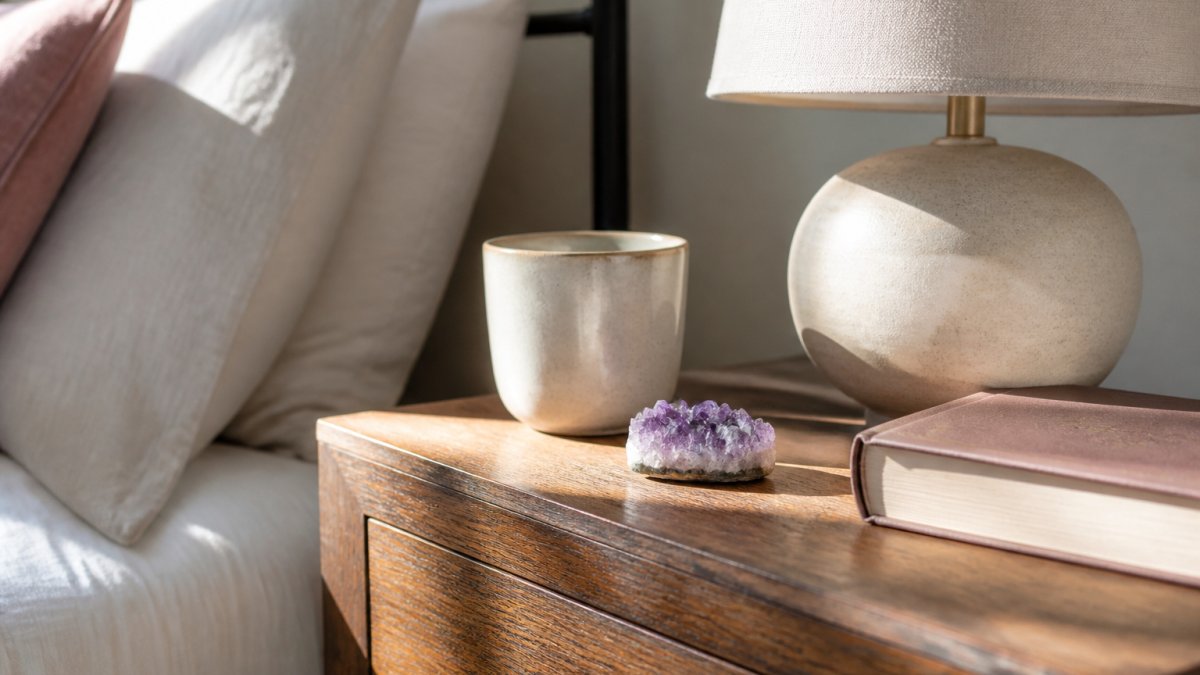
Room-by-room, here is how we would place it:
- Bedroom: Small cluster or point on the nightstand, kept out of direct sun.
- Living room: Standing cut base cluster as a shelf or coffee table anchor.
- Office: A point beside the monitor to break up hard lines.
- Meditation space: A larger cluster as the altar centerpiece.
- Entryway: One medium piece on a tray with a dish for keys.
Group odd numbers. Three pieces of different heights read better than two matching ones.
Care, Cleaning, and Sunlight Risks
Amethyst fades in prolonged direct sunlight, and that is the main risk most buyers miss. The mechanism is simple: the color comes from trace iron and irradiation in the crystal lattice, and sustained ultraviolet exposure can bleach the violet over months. Keep pieces in indirect light, especially near south- and west-facing windows where afternoon sun is strongest.
A Placement Checklist
Before you set a piece down, run through these checks:
- Light: Is the spot out of direct sun for most of the day? A shelf a few feet back from a window is safer than a windowsill.
- Stability: Is the surface level and wide enough that a bump will not send the piece over the edge?
- Traffic: Is it away from walkways, doors, and places pets jump?
- Heat: Keep it off radiators, stovetops, and heat registers, which can stress the crystal.
- Humidity: Bathrooms with heavy steam are a poor choice for raw specimens with matrix bases.
Cleaning Without Damage
Dust with a soft dry cloth or a soft brush. For crevices, a dry soft-bristle brush works better than a cloth. Avoid harsh cleaners, saltwater, and ultrasonic cleaners, which can damage the crystal structure or dull the surface. For deeper cleansing, moonlight, sound, or selenite are safe options. Our guide to cleansing crystals covers seven methods in detail.
Handling and Storage
Raw amethyst tips are fragile. When moving a cluster, support the base with both hands rather than gripping the points. Store spare pieces wrapped in soft cloth or bubble wrap, not loose in a drawer where they can knock against each other. If a tip does break, keep the fragment, it does not reduce the piece's decorative value, and some buyers prefer the natural wear.
When to Rotate
A simple habit: rotate pieces away from strong seasonal light. If a shelf gets bright summer sun, move the specimen to a shadier spot for those months and bring it back in winter. This alone prevents most fading.
Choosing Your Raw Amethyst Piece
Start with the surface, then pick the piece. Measure the space, decide the role, then match size and color to it.
At the decision point, a raw amethyst cluster in the 2-2.5 inch range covers most rooms without overwhelming them. It is also the safest gift size.

Ask three questions before buying:
- Does the seller show real photos of the exact piece?
- Is the origin stated, and is sourcing described honestly?
- Is the return policy clear if the piece does not resonate?
We cleanse every piece energetically before shipping and photograph what you actually receive, so there are no surprises when the box opens.
Raw amethyst earns its place in home decor because it delivers natural character at a price manufactured decor struggles to match.
Frequently Asked Questions
Is raw amethyst worth it for home decor?
It depends on what you want from the piece. Raw amethyst gives you a one-of-a-kind natural formation with visible crystal points, and it costs less than polished display pieces at the same visual size. MyLee Moon Blessings sells raw clusters from $7.77 and standing cut-base specimens from $28.00. If you want a shelf piece with natural character and a calm, unpolished look, the value is strong. If you need perfectly uniform shapes, polished stone suits that better.
How much does rough amethyst cost?
Rough amethyst price varies by size, color depth, and origin. At MyLee Moon Blessings, a 2 to 2.5 inch raw cluster is $7.77, a single amethyst point is $5.00, and cut-base standing specimens run from $28.00 depending on weight and origin. Uruguayan pieces with darker color generally cost more than lighter Brazilian pieces.
How can you tell if an amethyst is real or fake?
Look at the color distribution and the crystal structure. Real amethyst shows uneven color, natural inclusions, and irregular crystal points rather than a perfectly uniform dye job. Check the base too: genuine clusters grow from a rock matrix. Heat-treated stones often look unnaturally orange at the tips, and dyed stones can leave color on a damp cloth. Ask the seller for real photographs of the exact piece and whether it is natural, heated, or dyed.
Does amethyst fade in sunlight?
Yes. Prolonged direct sunlight can fade amethyst's purple over time, and the effect is gradual enough that many people miss it until the color has shifted. Display raw amethyst in indirect light, away from a south-facing window that gets hours of direct sun. For cleansing, use moonlight, sound, or selenite rather than saltwater, which can damage the crystal structure.
What should you look for when buying an amethyst geode?
Check four things: color saturation, crystal tip condition, formation density, and whether the piece stands on its own. Deep violet with visible sparkle reads better on a shelf than pale, cloudy crystal. Inspect tips for chips or breaks, since broken points lower both appearance and resale value. A cut base means no stand is needed. Ask for the exact piece's weight and height so you can judge scale before it arrives.
