

Is It Safe to Buy Crystals Online? A 2026 Buyer's Guide
Last Updated: October 23, 2026
Quick Summary
Yes, it is safe to buy crystals online when you verify the seller, confirm treatment and origin disclosure, and pay through channels that protect you. The real risk is an anonymous listing with no return policy, no real photos, and no way to reach a human, so run a short verification checklist before you spend a dollar.
- Treat every marketplace listing as unverified until you read reviews, find real customer photos, and confirm return terms.
- Ask sellers to state whether a stone is natural, synthetic, or treated, and request close-up photos in natural light.
- Send one specific pre-sale question and expect a detailed answer, often within one business day.
- Pay by credit card or a recognized platform with buyer protection, and never move a transaction off the platform.
- Screenshot the listing and checkout page so you have evidence if the stone arrives looking different.
Table of Contents
- Is It Safe to Buy Crystals Online? The Short Answer
- Where to Buy Crystals Online: Marketplaces vs. Specialist Retailers
- How to Tell if a Crystal Is Real: A Practical Checklist
- How to Verify a Seller Before You Pay
- Ethical Crystal Sourcing: What to Ask Before You Buy
- Payment Security, Shipping, and Scam Prevention
- Crystal Return Policy: What Protections You Should Expect
- Conclusion
- Frequently Asked Questions
Is It Safe to Buy Crystals Online? The Short Answer
Yes, it is safe to buy crystals online, provided you verify the seller, understand what you are purchasing, and pay through channels that protect you.
Below, we walk through where to buy crystals online, how to tell if a crystal is real, and how to spot a seller worth trusting before you spend a dollar.
Where to Buy Crystals Online: Marketplaces vs. Specialist Retailers
The two main channels for buying crystals online are large marketplaces and specialist crystal retailers. Each carries a different risk profile, and knowing which one you are shopping on changes how much verification you need to do yourself.
Online Marketplaces: Convenience With Trade-Offs
Marketplaces offer huge selection and buyer protection programs, but the seller behind any given listing may be a reseller with no direct relationship to the stone. Product images are often reused stock shots, and descriptions may be copied from other listings. Many buyers find that marketplace purchases arrive fine, but the burden of checking authenticity falls almost entirely on you.
Specialist Crystal Retailers: Higher Trust, Higher Scrutiny
Specialist retailers stake their reputation on crystal quality and disclosure, so they tend to publish real photography and describe treatments. That does not mean you should skip the checks. A specialist store still needs to prove its sourcing and return terms. The difference is that a good specialist will answer those questions directly, while a marketplace seller may simply disappear.
| Channel | Selection | Buyer Protection | Verification Burden |
|---|---|---|---|
| Large marketplace | Very broad | Platform-level | High, falls on you |
| Specialist retailer | Curated | Store policy | Lower, but confirm terms |
| Local shop | Limited | In person | Low, you inspect first |
How to Tell if a Crystal Is Real: A Practical Checklist
Knowing how to tell if a crystal is real starts with asking what "real" means. A genuine stone is natural material, while an imitation, synthetic, or heavily treated stone is manufactured or altered. Both can be beautiful, but you deserve to know which one you are buying.
Run through this checklist before you purchase:
- Ask the seller to confirm whether the stone is natural, synthetic, or treated
- Request close-up photos and, ideally, a short video in natural light
- Look for internal inclusions and uneven color, which often signal natural material
Treatments, Imitations, and What Sellers Should Disclose
Heat treatment, dyeing, and stabilization are common in the gemstone trade, and reputable sellers disclose them. The Federal Trade Commission guidance on jewelry and gemstone marketing makes clear that sellers must not misrepresent what a stone is. If a listing calls a dyed agate "natural," that is a red flag. A trustworthy seller tells you plainly what was done to the stone, if anything.
How to Verify a Seller Before You Pay
Verifying a seller is the single highest-value step in safe crystal shopping online, and it is more concrete than most buyers realize. Instead of asking whether a store "looks trustworthy," run a short verification sequence that produces evidence you can act on. Ten minutes of checking beats an hour of browsing.
Step 1: Confirm the Business Is Identifiable
A legitimate seller makes it easy to know who you are dealing with. Look for a full business name, a physical mailing address (a P.O. box alone is a yellow flag), a working phone number or contact form, and a stated response-time expectation. Check the footer and the about page for a business registration or tax identifier where one is published.
Step 2: Read the Policies Before the Products
Policies reveal more about a seller than product photos do. Open the shipping, return, and privacy pages and confirm four things: a stated return window in days, who pays return shipping, how transit damage is handled, and whether the checkout is encrypted (look for "https" and a recognizable payment processor at checkout).
Step 3: Test Responsiveness With a Real Question
Send one specific pre-sale question, such as "Is this amethyst cluster natural or heat-treated, and what are its dimensions in inches?" A serious seller answers with specifics, often within one business day. A seller who replies with a generic slogan, dodges the treatment question, or takes a week is showing you the level of service you will get after payment.
Step 4: Audit Reviews for Patterns, Not Stars
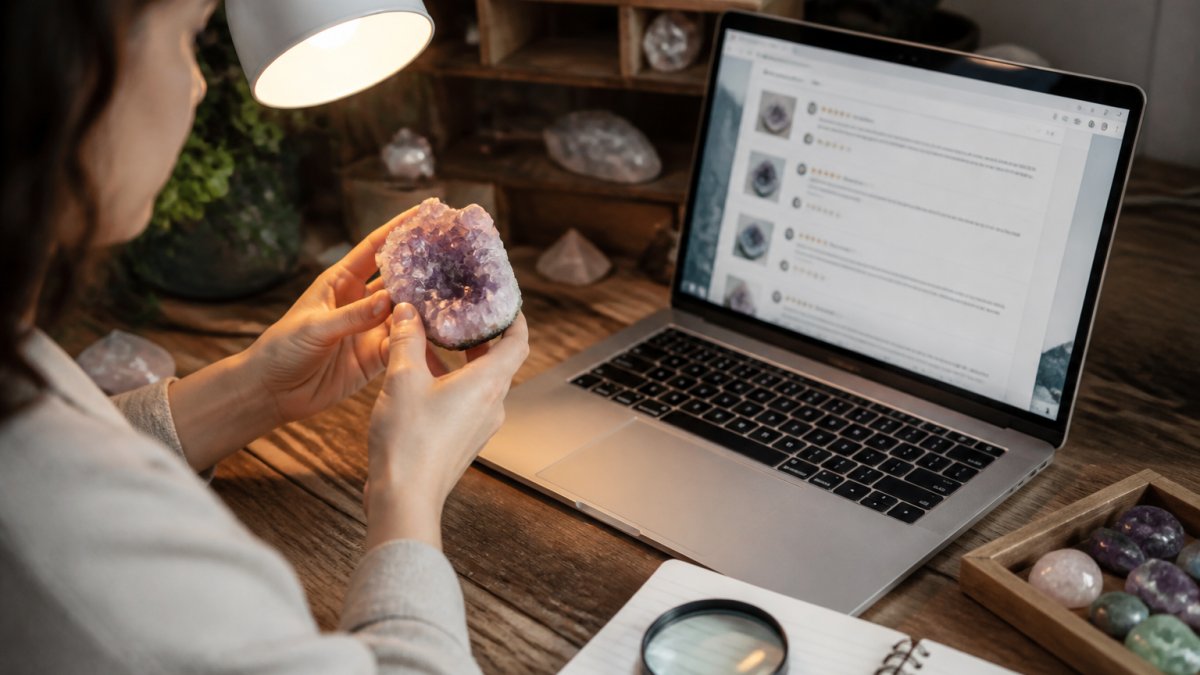
Sort reviews by newest and by lowest rating, then look for recurring themes: stones arriving smaller than listed, colors that did not match the photos, slow shipping, or refused returns. Reviews that include customer photos of the delivered item are worth more than any five-star text-only review. Be wary of a cluster of near-identical five-star reviews posted within a short window, which is a common pattern in purchased reviews.
Step 5: Check Provenance and Disclosure Claims
Ask where the stones come from and whether the seller discloses treatments. A credible answer names a region or supplier relationship and states plainly whether a stone is natural, heat-treated, dyed, or synthetic. Vague "ethically sourced" language without specifics is a starting point for questions, not proof.
Ethical Crystal Sourcing: What to Ask Before You Buy
Ethical crystal sourcing means the stones were obtained without harm to workers or the environment, and a good seller can explain its supply chain. Ask directly where the stones come from and whether the seller works with suppliers who follow fair labor practices. You will not always get a full chain of custody, but you should get a straight answer rather than a slogan.
Payment Security, Shipping, and Scam Prevention
Payment security is where online crystal scams most often succeed, and the difference between a recoverable problem and a total loss usually comes down to how you paid. The goal is to keep a paper trail and a dispute right at every step.
Pay With Methods That Give You Recourse
Use a credit card or a recognized payment platform that offers buyer protection and dispute resolution. Credit cards generally let you dispute a charge for nondelivery or a materially different item, and major payment platforms publish their own buyer-protection terms. Never let a seller talk you into completing a transaction off the platform, because doing so typically voids the platform's buyer protection (Buying From an Online Marketplace).
Recognize the Price and Pressure Red Flags
A suspiciously low price on a desirable specimen is a warning, not a bargain. Common scam patterns include limited-time pressure ("only one left, pay in the next hour"), requests to move the conversation to email or a messaging app, sellers who refuse to send additional photos of the exact item, and listings that use the same stock photo across many products.
Protect Your Order Record
Screenshot the product listing, description, and checkout page at the time of purchase, and keep order confirmations and any chat records. If the stone arrives looking different from the listing, that record is your evidence when you request a return or open a dispute. Save the tracking number and delivery confirmation as well.
Shipping: Confirm Carrier, Tracking, and Insurance
Before you buy, confirm which carrier the seller uses, whether tracking is included, and how the seller handles lost or damaged packages. For valuable pieces, ask whether the shipment is insured and who files the claim. Fragile specimens should ship in padded packaging with the stone immobilized; a seller who will not discuss packaging or insurance before the sale is telling you something important.
If Your Order Never Arrives
Contact the seller first through the store's documented channel and give a clear deadline for a response. If that fails, open a dispute with your payment provider within its stated window, and keep all correspondence. For packages marked delivered but missing, file a claim with the carrier and notify the seller in writing.
Crystal Return Policy: What Protections You Should Expect
A crystal return policy is your safety net, and it should be clear before you pay. Expect a stated window, conditions for returning an item in its original condition, and a plain explanation of who covers return shipping. MyLee Moon Blessings offers easy returns. If a store's policy is buried, contradictory, or missing, assume the worst and shop elsewhere.
| Protection | What to Confirm | Why It Matters |
|---|---|---|
| Return window | Days allowed and condition rules | Lets you send back a mismatch |
| Damage policy | Who covers transit damage | Protects fragile stones |
| Payment method | Dispute protection available | Recovers funds if scammed |
| Disclosure | Treatment and origin stated | Confirms what you bought |
Conclusion
Buying crystals online is safe when you treat it like any other considered purchase: verify the seller, read the disclosure, protect your payment, and know the return terms. MyLee Moon Blessings curates ethically sourced, authentic crystals with real photography, honest descriptions, and easy returns, so you can shop with confidence. Explore the collection and find a piece that supports your practice.
Frequently Asked Questions
Are crystals on Amazon real?
Some are, but the marketplace format makes verification harder. Amazon hosts thousands of sellers, and listings for dyed, glass, or resin imitations often use the same keywords as genuine stones. Before buying crystals online through a marketplace, check the seller's reviews across multiple listings, look for close-up photos of the actual stone, and read the product description for disclosure of treatments. If the listing says 'natural' but the price is far below what the stone typically costs, treat that as a warning sign.
How can you tell whether a crystal is real or fake?
Start with the product description: genuine sellers disclose treatments such as heat or dye, while imitations often avoid the topic. Look for close-up photos that show internal inclusions, natural color variation, and surface texture; glass and resin imitations tend to look too uniform. Weight is another clue, since real stone feels denser than plastic or glass of the same size. When in doubt, ask the seller directly how the stone was sourced and whether it has been treated, and check whether their crystal return policy covers authenticity concerns.
Is it better to buy crystals online or in person?
Both have advantages. In-person shopping lets you hold the stone, inspect it in natural light, and feel whether it resonates with you, which matters for meditation and energy work. Online shopping offers a far wider selection, often better prices, and access to specialist retailers who document ethical crystal sourcing. The safest approach is to buy online from sellers who provide real photography, detailed descriptions, and a clear return policy, so you can inspect the stone at home and send it back if it does not match the listing.
Can you return crystals bought online?
Return rights depend on the seller's stated policy, so read it before checkout. A fair crystal return policy typically allows returns within 14 to 30 days for stones that arrive damaged, misrepresented, or not as described, and many specialist retailers extend this to change-of-mind returns. Keep the original packaging and photograph the stone when it arrives so you have evidence if there is a dispute. Sellers who refuse all returns or bury the policy in fine print are a reason to shop elsewhere.
